Key Takeaways
- Facility painting is a maintenance tool, not just appearance work. It directly impacts uptime, safety, and compliance.
- Our crews work nights, weekends, and shutdowns to keep production running and patient areas, labs, and warehouses online.
- We use high-performance coatings: epoxy floors, chemical-resistant systems, corrosion control, and OSHA-compliant safety striping.
- We coordinate with facility managers on access, lifts, badges, SDS, and documentation so projects finish on time and as promised.
- Contact us for a facility walk-through and a written maintenance plan for the next 12-36 months.
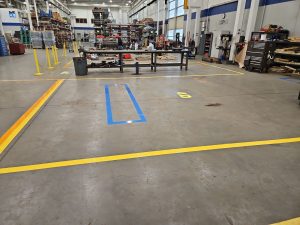
What Facility Painting Really Covers in Your Operation
Facility painting is ongoing interior and exterior work in industrial, institutional, medical, and warehouse environments, similar to the wide range of commercial and industrial painting services for multiple facility types in Wisconsin. This is not a one-time cosmetic project. Facility maintenance painting protects assets and keeps operations running.
For storage and distribution environments, our approach aligns with best practices for warehouse painting and line striping services.
Concrete areas we cover:
- Production floors and dock doors
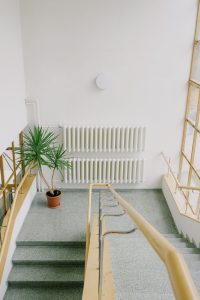
- Mezzanines and stair towers
- Machine enclosures and mechanical rooms
- Corridors and patient support areas
- Chilled water lines and structural steel
- Loading docks and equipment rooms
Typical coating types in plain terms:
- Acrylic wall systems for general interior surfaces
- Two-part epoxies for floors and high-wear areas
- Polyurethanes for UV resistance and exterior durability
- Intumescent fireproofing for steel protection
- Moisture-tolerant primers for damp substrates
Facility painting ties directly to your KPIs. Fewer OSHA findings. Cleaner audits. Better light reflectance in work areas. Less unplanned shutdown due to corrosion or coating failure.
When coatings fail, you pay twice. Once for the repair. Again for the operational downtime.
Planning a Facility Painting Project with Minimal Disruption
Every plan starts from your production calendar or patient schedule. Not from our convenience.
You know your daily operations better than anyone. We build around them.
Scheduling patterns that work:
- Night work on 10:00 p.m. to 6:00 a.m. shifts
- Weekend work for office areas and common spaces
- Coordinated work during annual shutdowns or planned outages
- Off-hours access for sensitive production zones
Pre-job site walk checklist:
| Area | What We Review |
| Traffic paths | Forklift routes, pedestrian flow, delivery schedules |
| Confined spaces | Permit requirements, ventilation needs |
| Lockout/tagout zones | Equipment isolation procedures |
| Sensitive equipment | MRI rooms, clean rooms, CNC lines |
| Ventilation | Air handling, exhaust capacity, negative pressure needs |
| We phase by zone or room with clear turnover milestones. You always know what comes offline, when, and for how long. |
Real-world example: A commercial painting services team repainted 150,000 square foot of racking and floors over three weekends. Zero missed shipping windows. Production continued Monday morning as scheduled.
Interior Facility Painting: Walls, Ceilings, and Occupied Spaces
Interior work often happens around staff, patients, and active production. Low odor, fast-curing systems and strict containment matter.
Core interior scopes:
- Walls in corridors and production areas
- Exposed structure and deck ceilings
- Offices attached to plants
- Cafeterias and locker rooms
- Loading corridors and high traffic areas
Coating choices by use:
| Application | Coating Type | Why |
| Corridors | Scrubbable coatings | Handles daily wear and cleaning |
| Clinics | Low-VOC systems | Protects air quality for patients |
| High industrial ceilings | Dryfall | Falls as dry particles, minimal cleanup |
| Wash-down or CIP areas | Chemical-resistant systems | Withstands harsh cleaners |
| How we handle protection and containment: |
Plastic walls to isolate work zones- Negative air when needed for dust and odor control
- Drop cloths over equipment and surfaces
- Daily cleanup to hand areas back ready for the morning shift
For any occupied healthcare or lab space, we document air quality testing, coating product data, and turnover times. Your compliance team gets what they need for audits.
Commercial interior projects in medical facilities require extra coordination. We work with your team to schedule around patient care, minimize disruption, and maintain indoor air quality standards, similar to the approach used in Madison commercial painting services that enhance business appeal.
Exterior and Structural Facility Painting
Exterior coatings protect substrates such as structural steel, tilt-up panels, masonry, and metal panels from corrosion, UV damage, and freeze-thaw cycles, as outlined in comprehensive resources on commercial exterior painting for property managers and contractors.
Typical exterior scopes:
- Façades and parapets
- Dock doors and bollards
- Gates and fencing
- Pipe bridges and rooftop units
- Tanks and silos
- Exposed stair towers
Access solutions we deploy:
| Equipment | Application | Height Range |
| Scissor lifts | Flat surfaces, moderate heights | Up to 40 ft |
| Articulating boom lifts | Hard-to-reach areas, obstacles | 40-80 ft |
| Swing stages | Long vertical runs | Variable |
| Spotters | Active yards with truck traffic | Ground level |
Surface prep varies by condition:
- Power washing to remove dirt and loose coatings
- Mechanical scraping and sanding for adhesion
- Spot-priming rust with direct-to-metal primers
- Full system repaints on failing coatings
We plan exterior painting seasonally. Target temperature range: 50-90°F. Humidity below 85%. We document weather conditions during each shift for quality records.
Exterior surfaces on industrial facilities are constantly assaulted by weather, UV radiation, and pollution. The right tools and prep work determine whether coatings last 3 years or 15, and professional commercial painting is a proven way to maximize commercial property value with durable exterior and interior coatings.
Safety, Compliance, and Documentation for Facility Painting
Our crews follow OSHA rules, your site rules, and manufacturer data sheets on every shift. This is non-negotiable.
Documentation items we provide:
- Job-specific JHAs (Job Hazard Analyses)
- SDS binders for all coatings on site
- Lift inspection logs
- Daily safety huddles documentation
- Sign-in/out records for all crew members
Requirements common to industrial and institutional sites:
| Requirement | Purpose |
| Background checks | Site security, liability reduction |
| Photo badges | Access control, accountability |
| PPE standards | Worker protection, compliance |
| Hot work permits | Fire prevention near flammables |
| EHS coordination | Alignment with your safety regulations |
| Containment around sensitive processes: |
Food production areas: No overspray, no contamination- Sterile compounding zones: Dust control, air quality monitoring
- OR support areas: Odor-free coatings, off-hours work
- Electronics manufacturing: Static control, particle management
Professional painting contractors know that one contamination incident can cost more than the entire painting project. We take containment seriously.
Final walkthroughs are standard. Punch lists close out in writing. Warranty details get documented before the crew leaves the site. High quality finishes mean nothing without the paperwork to back them up, and you can see examples of these results in our commercial and industrial painting project gallery.
How to Build a Long-Term Facility Painting Maintenance Plan
Reactive painting is expensive and disruptive. A 3-5 year written plan spreads cost and reduces unplanned shutdowns.
Basic maintenance cycle:
| Interval | Scope |
| Annual | Inspections of high-wear zones, touch ups as needed |
| 3 years | Interior touch-up cycles for corridors and common areas |
| 7-10 years | Exterior system repaints, major floor recoats |
| Adjust as needed | Harsh environments may require shorter cycles |
| How to prioritize zones: |
- Life-safety markings (egress paths, fire equipment, hazard zones)
- Corrosion on structural members
- Chemical exposure areas
- Public-facing entrances (customer experience matters)
- Lower-risk back-of-house areas
Build a simple inventory by room or area:
| Field | What to Document |
| Substrate | Concrete, drywall, CMU, steel, cinder blocks |
| Current coating | Epoxy, latex, urethane, etc. |
| Age of last project | Year of most recent work |
| Condition rating | 1-5 scale (1 = needs immediate attention) |
| Building maintenance services should include this kind of documentation. Property managers who track coating conditions avoid surprises and can align their strategy with a Madison commercial painting guide for long-lasting industrial and office solutions. |
We walk the facility with you, document conditions, and present a phased plan with budget ranges and recommended windows for each phase. If you are comparing providers, review a guide on how to choose the best Milwaukee commercial painting contractor. Your next commercial project starts with a conversation, not a crisis.
FAQ
How often should a busy facility be repainted?
Timing depends on traffic, chemicals, and cleaning routines. Many facilities inspect yearly, schedule touch ups every 2-3 years, and plan larger repaints at 5-10 year intervals.
Heavy wash-down, forklift traffic, or coastal exposure may shorten cycles. Conditioned office or lab spaces often last longer between projects.
Schedule a walkthrough to set specific intervals based on your actual conditions. Generic averages do not account for your environment.
Can facility painting be done while production or clinical work continues?
Many projects happen in live environments. We work nights, weekends, and tight phased areas with proper barriers and ventilation.
We use low-odor, low-VOC coatings, dust containment, and clear zone turnover times. Your staff knows which areas are open or closed at all times.
Some high-risk tasks still require short shutdowns. Plan these with the facility team weeks in advance. The right contractor builds this into the schedule from day one.
What information should I have ready before requesting a facility painting quote?
Key details to gather:
- Site location and approximate square footage
- Photos or drawings of target areas
- Known substrate issues (moisture, peeling, rust)
- Any coatings currently in use, if known
Operational limits to share:
- No-spray zones and clean areas
- Shift times and blackout dates
- Access limits for lifts or scaffolding
Share any existing safety rules, contractor manuals, or vendor compliance requirements early. Qualified professionals build these into proposals upfront.
How do you handle hard-to-reach areas, such as high ceilings or over production lines?
We plan access with the right equipment: scissor lifts, articulating boom lifts, or other approved methods based on clearance and floor capacity.
Work over active lines may require off hours scheduling, temporary covers, or short line stoppages. All coordinated in advance with your team.
Each access method gets reviewed for safety. Fall protection, equipment inspections, and spotters in traffic areas are standard. Professional results require professional planning.
What is the typical lead time to start a facility painting project?
Lead time often ranges from 2-6 weeks. This depends on project size, coating cure requirements, and your preferred work windows.
Time-sensitive safety or compliance work can sometimes be scheduled sooner. We adjust crew size or shift to night work when needed.
Contact us as soon as you know your shutdown or remodel dates. Locking in manpower, materials, and equipment for your window takes coordination. Earlier is better.
Ready to get started? Contact us for a facility walk-through and a written maintenance plan covering your next 12-36 months. We work around your schedule to keep your facility running while we protect your assets.